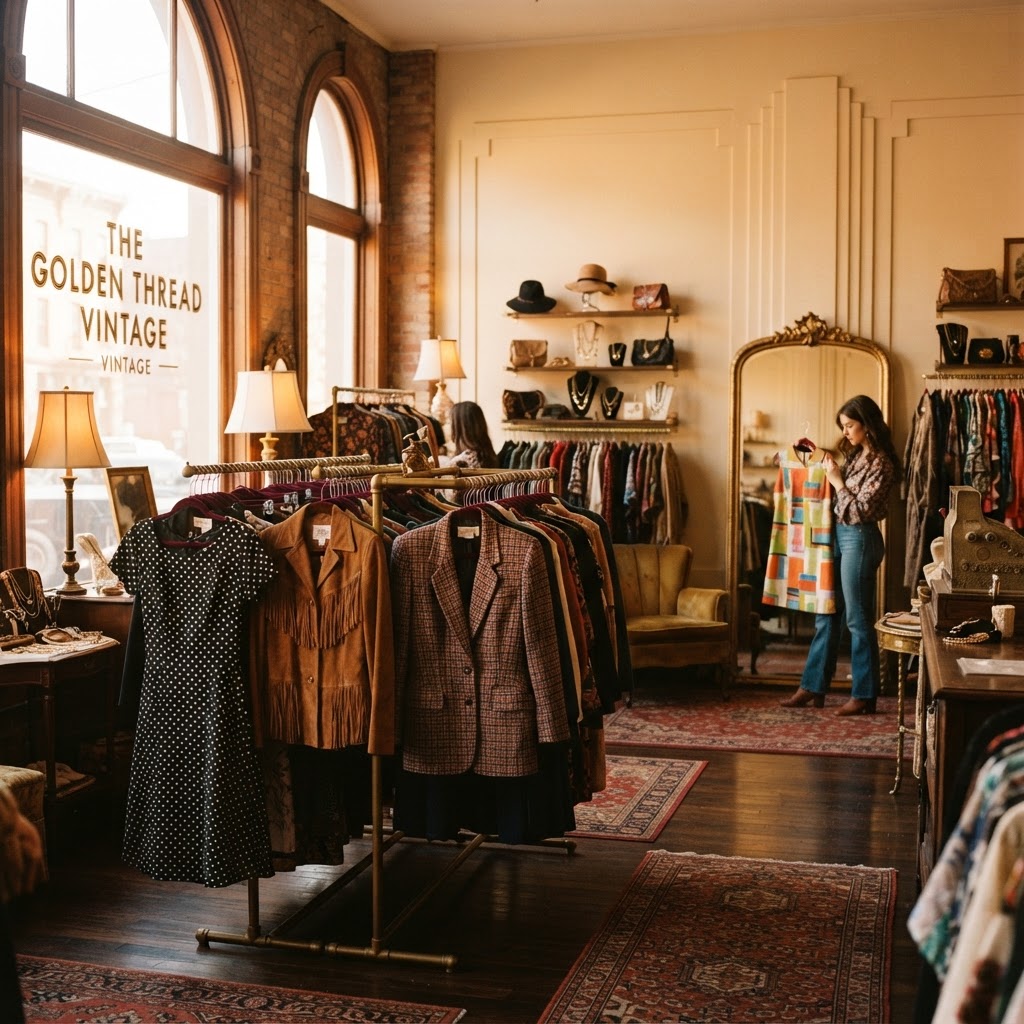
Dress Through the Decades: How Vintage Fashion Can Help You Discover Your True Personal Style
Your personal style isn't something you invent — it's something you uncover. Vintage fashion, with its rich tapestry of silhouettes, fabrics, and cultural moments spanning a century of human expression, offers the ultimate playground for that discovery. Whether you're drawn to the glamour of the 1940s or the rebellious energy of the 1990s, the past holds the key to your most authentic self.
Why Vintage Fashion Is the Ultimate Style Laboratory
In a world of fast fashion and algorithm-driven trends, it can feel nearly impossible to know what you actually like versus what you've simply been told to like. That's where vintage fashion becomes something truly powerful. When you shop vintage, you're pulling from decades of distinct aesthetic movements — each one a reaction to the world that produced it. Trying on a 1930s bias-cut gown or a 1970s suede fringe jacket isn't just dressing up; it's a conversation with history, and more importantly, with yourself.
Personal style isn't about wearing what's on the runway. It's about understanding the visual language that feels instinctively like you. Vintage fashion, spanning from the roaring 1920s to the eclectic 2000s, gives you an enormous vocabulary to draw from.
Start With a Decade That Calls to You
Before you dive into mixing and matching, it helps to identify which era speaks to something deep in your aesthetic soul. Flip through old photographs, watch films from different periods, or simply scroll through curated vintage collections. Notice where your eye keeps landing. Do you feel a pull toward the structured elegance of the 1950s, or does the laid-back bohemian spirit of the 1970s feel more like home?
This initial gravitational pull is data. It tells you something about the core values embedded in your style — whether that's precision and femininity, rebellion and freedom, minimalism, maximalism, or anything in between. Don't overthink it. Just notice.
Decade-by-Decade Style Archetypes
The 1920s–1930s: The Romantic Modernist
If you find yourself drawn to drop-waist silhouettes, art deco beading, and fluid crepe fabrics, you may be a Romantic Modernist at heart. This era blended a newfound sense of women's liberation with extraordinary decorative craftsmanship. Incorporating a beaded 1920s headpiece or a 1930s silk charmeuse blouse into a modern outfit signals a love of elegance with an avant-garde edge.
The 1940s–1950s: The Polished Classicist
Few eras mastered tailoring and proportion the way the 1940s and 1950s did. If pencil skirts, nipped waists, and structured blazers make your heart sing, you likely have a Polished Classicist sensibility. This style is about intention — every piece considered, every line deliberate. A vintage 1950s sheath dress or a 1940s wool crepe suit can anchor a wardrobe built around timeless sophistication.
The 1960s–1970s: The Free Spirit
The 1960s broke every rule the previous decades had carefully constructed, and the 1970s ran even further into self-expression, earth tones, and fluid movement. If you love a good A-line mod dress, a wide-collared shirt, or a pair of perfectly worn-in flared corduroys, you're tapping into the Free Spirit archetype. This era is about joy, individuality, and a healthy disregard for anyone else's opinion of your outfit.
The 1980s: The Bold Maximalist
The 1980s refused to be ignored. Power shoulders, saturated colors, oversized silhouettes, and unapologetic glamour define this decade. If your instinct is always to add more — another layer, a bolder accessory, a brighter color — the 1980s might be your spiritual home. Vintage 80s pieces are having a massive cultural moment right now, and for good reason: they were made to be seen.
The 1990s–2000s: The Cool Minimalist or Ironic Maximalist
The 1990s gave us two warring aesthetics that somehow coexisted: sleek minimalism (think slip dresses, clean lines, muted palettes) and streetwear-influenced maximalism (logo everything, chunky sneakers, bold prints). If you feel most yourself in a simple 90s slip dress layered over a fitted turtleneck, you're a Cool Minimalist. If you're reaching for the vintage JNCO jeans and a graphic tee, you're leaning Ironic Maximalist — and both are completely valid.
How to Build a Cross-Decade Wardrobe
Once you've identified your era or eras, the real magic begins: mixing decades intentionally. This is where personal style truly separates itself from costume. The goal isn't to look like you stepped out of a time machine — it's to let different eras in conversation with each other reveal something new.
Here are a few principles to guide you:
Anchor with one strong vintage piece. Let a 1970s leather jacket or a 1950s circle skirt be the hero of the outfit, and build around it with simpler pieces — modern or vintage — that don't compete.
Use proportion as your compass. Different decades played with proportion in opposite ways. A voluminous 1980s blouse pairs beautifully with slim, high-waisted 1970s trousers because the volume is balanced. When mixing eras, think about where the drama lives and counterbalance it.
Let fabric and color create cohesion. You can wear a 1940s blouse with 1990s trousers if they share a color story or a similarly luxurious fabric weight. Cohesion doesn't require matching decades — it requires a visual through-line.
Accessories are your time-travel tool. A 1920s brooch on a modern blazer lapel, a 1960s silk scarf tied to a contemporary bag — accessories are the lowest-risk, highest-reward way to introduce vintage into your wardrobe and test which eras resonate.
The Mindset Shift: Style as Self-Knowledge
One of the most underrated benefits of exploring vintage fashion is what it teaches you about your own relationship with identity and self-expression. When you try on a 1940s suit and feel immediately powerful, that's information. When you put on a 1960s shift dress and feel free and playful, that's information too.
Personal style is ultimately a practice of paying attention to yourself — noticing what makes you feel most alive, most confident, most like the person you're trying to become. Vintage fashion accelerates that practice because it offers so much aesthetic diversity in one place. You're not choosing between this season's three trending silhouettes. You're choosing from a century of human creativity.
Keep a simple style journal. When you try something on and it clicks, write down what it is about the piece — the color, the structure, the era, the feeling. Over time, patterns will emerge, and those patterns are your personal style DNA.
Caring for Your Vintage Finds
Building a vintage wardrobe is a long game, and proper care ensures your pieces last another generation. Always check the fabric content and condition before purchasing. Hand wash delicates in cold water, store knits folded rather than hung, and use padded hangers for structured jackets and dresses. When in doubt, take a piece to a trusted dry cleaner who has experience with vintage garments.
Investing in a good tailor is also transformative. A 1950s dress with a perfect silhouette but a slightly off fit can become a true wardrobe cornerstone with a few simple alterations. Treat vintage pieces as heirlooms, because that's exactly what they are.
Conclusion: Your Style Story Starts at Ensemble
Finding your personal style is one of the most creatively rewarding journeys you can take, and vintage fashion is one of the richest maps available to guide you. Every decade offers a different mirror, and somewhere in that century of style, there's a reflection that looks unmistakably like you.
At Ensemble, we've curated an authentic collection of vintage clothing spanning the 1920s through the 2010s, sourced with care and presented with the context you need to shop confidently. Whether you're just beginning your vintage journey or deepening a lifelong passion, Ensemble is your destination for the pieces that will help you dress not just for where you are, but for who you're becoming. Explore the decades, trust your instincts, and let your wardrobe tell your story.