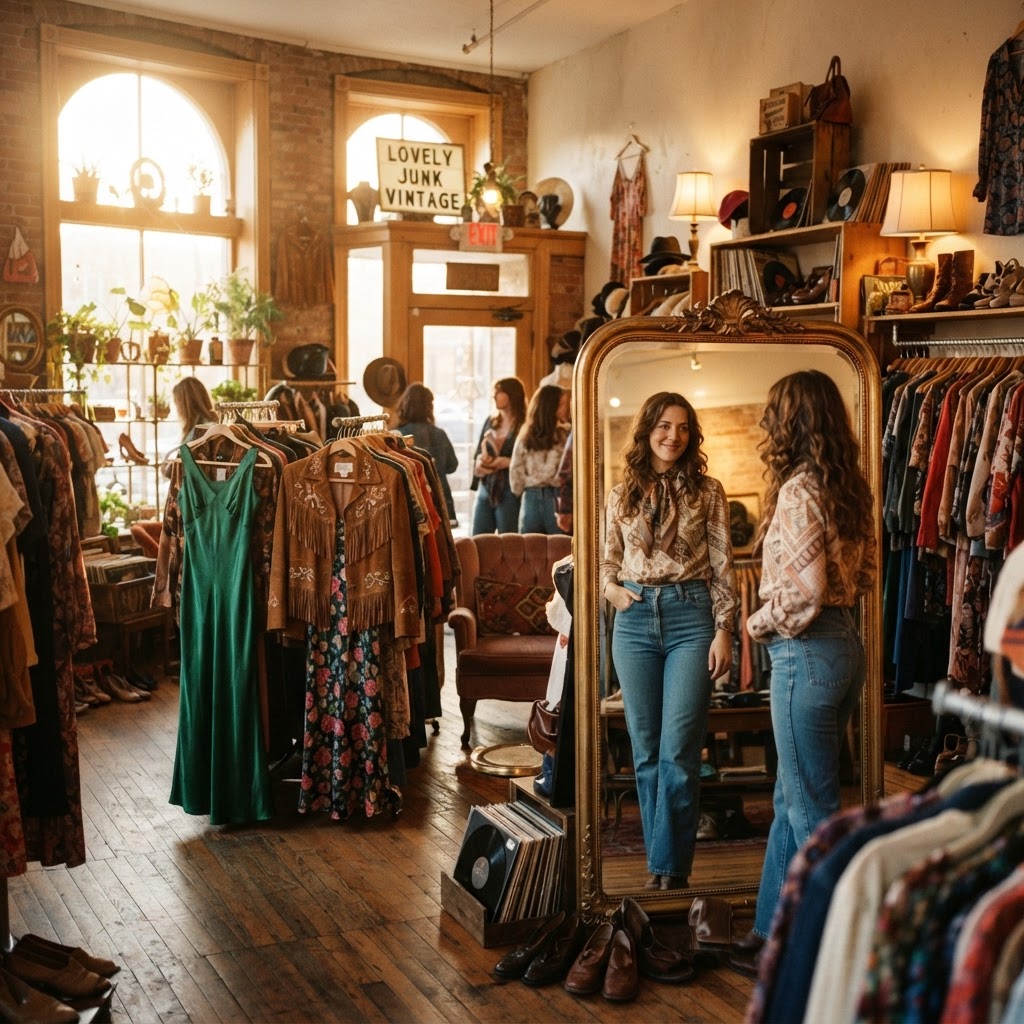
Dress the Decades: How to Find Your Personal Style Through Vintage Fashion
Your personal style isn't something you're born with — it's something you discover, piece by piece, decade by decade. Vintage fashion offers a treasure trove of silhouettes, fabrics, and attitudes that modern clothing simply can't replicate. Whether you're drawn to the glamour of the 1940s or the grunge of the 1990s, the past holds the key to your most authentic wardrobe.
Why Vintage Fashion Is the Ultimate Style Laboratory
In a world of fast fashion and algorithm-driven trends, finding a look that feels genuinely yours can feel overwhelming. Everyone seems to be wearing the same capsule wardrobe, the same neutral tones, the same silhouettes pushed by the same influencers. But what if the most exciting style inspiration wasn't ahead of us — it was behind us?
Vintage fashion, spanning nearly a century of cultural shifts, social revolutions, and artistic movements, gives you something modern retail simply cannot: radical variety. From the structured elegance of the 1930s to the maximalist chaos of the 1980s, every decade carried its own visual language. Learning to read that language — and borrowing the words that resonate with you — is one of the most powerful ways to build a wardrobe that tells your story.
Start With Feeling, Not Facts
Before you dive headfirst into a rack of vintage blazers or a curated collection of 1970s wrap dresses, take a moment to ask yourself a simple question: How do I want to feel when I get dressed?
Do you want to feel powerful? Romantic? Rebellious? Effortless? Each decade in fashion history has its own emotional signature, and matching that energy to your own personality is the first step toward discovering your style sweet spot.
- Powerful and architectural? Look to the 1940s — padded shoulders, tailored waists, and bold wool suiting defined an era when women entered the workforce and dressed with intention.
- Romantic and dreamy? The 1930s introduced bias-cut silk gowns and delicate lace details that feel impossibly feminine even today.
- Free-spirited and earthy? The 1970s gave us flowing bohemian silhouettes, earthy palettes, and an anything-goes attitude that remains deeply influential.
- Edgy and nonconformist? The 1990s brought grunge, minimalism, and a deliberate rejection of polish that still feels fresh and relevant.
Decade by Decade: A Style Guide to the Past
The 1920s–1930s: Old Hollywood and Art Deco Elegance
The 1920s introduced the world to the flapper — a figure of liberation draped in drop-waist dresses, beaded embellishments, and T-strap heels. The aesthetic is cinematic and celebratory, perfect for someone who wants their wardrobe to feel like a constant opening night.
The 1930s refined that energy into something more sophisticated. Bias-cut gowns that skimmed the body, wide-leg trousers for women, and richly textured fabrics like velvet and crepe defined a decade that balanced austerity with glamour. If your style icon is a golden-age Hollywood actress, this is your era.
The 1940s–1950s: Structure Meets Sweetness
Wartime rationing in the 1940s paradoxically produced some of the most ingenious fashion in history. Utility dressing — clean lines, minimal embellishment, strong shoulders — gave way by mid-decade to a more celebratory femininity. The 1950s then exploded with New Look silhouettes: nipped waists, full skirts, and a joyful embrace of postwar abundance.
If you love the idea of a wardrobe that feels curated and intentional, that prizes fit above all else, the 1940s and 1950s offer endless inspiration. A well-preserved 1950s circle skirt or a 1940s crepe blouse can anchor a modern outfit while adding an unmistakable sense of occasion.
The 1960s–1970s: Revolution and Self-Expression
Few decades transformed fashion as dramatically as the 1960s. The decade began with tailored elegance — think Jackie Kennedy's shift dresses and pillbox hats — and ended with psychedelic prints, mini skirts, and mod geometric patterns. Op art influences, bold color blocking, and a youthful energy make 1960s pieces endlessly fun to style.
The 1970s then took that freedom and stretched it further. Boho chic reigned supreme: peasant blouses, flared denim, suede fringe jackets, and platform sandals. But the decade also had a sleeker side — disco-era halter tops, wrap dresses, and fluid jersey fabrics that celebrated the body in motion. If your personal style leans toward eclecticism and self-expression, the '70s wardrobe is an inexhaustible well.
The 1980s–1990s: Power, Punk, and Minimalism
The 1980s are divisive, but that's exactly what makes them fascinating. Power dressing — oversized blazers, strong shoulders, bold color — defined boardroom fashion for a generation. At the same time, the decade birthed punk, new wave, and hip-hop aesthetics that were equally influential. If you love drama and aren't afraid to take up space, '80s pieces can be transformative in a modern context — especially when worn with restraint.
The 1990s arrived as a deliberate correction. Minimalism ruled the runways — clean lines, neutral palettes, and a studied casualness that felt effortless. Simultaneously, grunge brought flannel shirts, combat boots, and a beautiful indifference to conventional polish. The '90s are perhaps the easiest decade to integrate into contemporary dressing, which explains their enduring dominance in vintage markets.
The 2000s–2010s: Nostalgia in Real Time
It might feel strange to call early 2000s fashion vintage, but here we are — and the aesthetic is experiencing a full-blown revival. Low-rise jeans, logo-heavy accessories, velour tracksuits, and butterfly clips have all made their comeback. Meanwhile, the 2010s brought normcore, athleisure, and a renewed interest in sustainability that feels more relevant than ever. These decades are the easiest entry point for vintage newcomers, offering familiar references with enough distance to feel fresh.
How to Mix Decades Without Looking Like a Costume
The secret to wearing vintage well is proportion and intention. The goal isn't to recreate a historical moment — it's to extract the essence of a piece and let it coexist with your present-day self.
Here are a few golden rules:
- Anchor vintage with modern basics. A 1960s mod shift dress looks incredible with contemporary white sneakers. A 1940s blazer becomes wearable today over a simple fitted tee and straight-leg jeans.
- Mix no more than two decades at once. A '70s wrap blouse and '90s wide-leg trousers? Beautiful tension. Add a '60s coat and you've crossed into confusion.
- Let fit be your filter. Vintage sizing is notoriously inconsistent. The most important rule is that the piece fits — or can be tailored — to your actual body. A perfectly fitted 1950s dress will always outperform a sentimental but ill-fitting 1980s blazer.
- Follow your instincts. If you pick up a piece and feel something — excitement, recognition, joy — that's your style speaking. Trust it.
Building a Signature Look from Across the Decades
The most stylish people don't belong to a single decade. They are curators, pulling a 1930s silhouette here, a 1990s attitude there, finding unexpected harmony between eras. Your wardrobe is not a museum — it's a living, evolving expression of who you are right now.
Start small. Choose one decade that genuinely calls to you and find three or four key pieces that represent its spirit. Wear them with what you already own. See what conversations start. Notice what feels right. Then expand.
Over time, you won't just have a wardrobe — you'll have a visual autobiography.
Discover Your Decades at Ensemble
At Ensemble, we believe that every piece of clothing carries history, and that the right vintage find can change the way you see yourself. Our marketplace is home to thousands of authenticated pieces from the 1920s through the 2010s, carefully sourced and thoughtfully described so you can shop with confidence.
Whether you're taking your first steps into vintage dressing or you're a seasoned collector looking for that perfect 1970s leather jacket, Ensemble is your destination. Because the best version of your personal style might just be waiting in the past — and we're here to help you find it.