Dress Like You Mean It: Finding Your Personal Style Through the Magic of Vintage Fashion
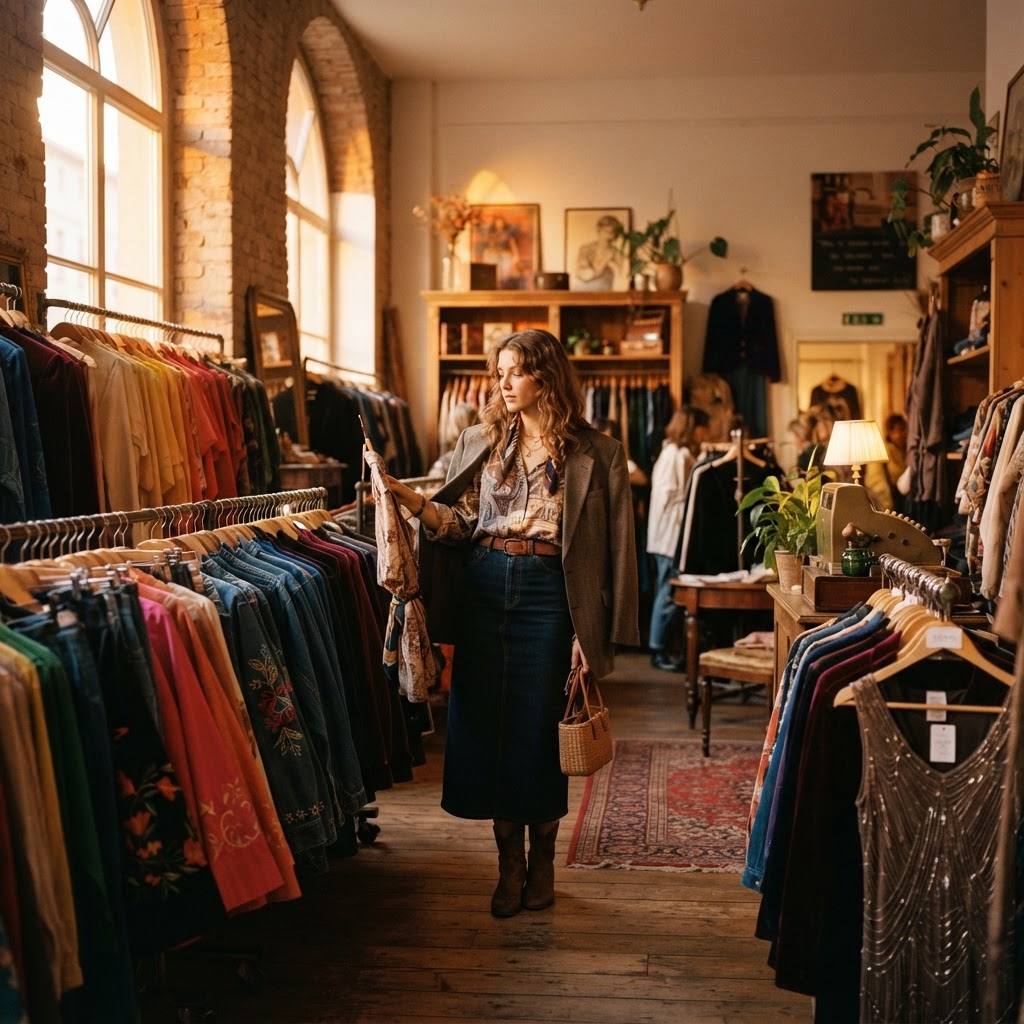
Your personal style isn't something you find at a fast-fashion checkout — it's something you discover, decade by decade, in the racks of history. Vintage fashion offers a treasure trove of silhouettes, fabrics, and attitudes that modern clothing simply can't replicate. Whether you're drawn to the glamour of the 1940s or the irreverence of the 1990s, the past has something extraordinary to tell you about who you are today.
Why Personal Style Feels So Hard to Find
In an era of algorithm-driven fashion trends and micro-seasons that change before you've even worn the clothes, finding a look that feels genuinely yours can be exhausting. We're inundated with options, yet somehow everything starts to look the same. The fix, counterintuitively, might lie not in scrolling forward — but in looking back.
Vintage fashion is more than nostalgia. It's a living archive of human self-expression, spanning nearly a century of cultural upheaval, artistic movements, and shifting ideas about identity. Each decade produced a distinct aesthetic vocabulary — a set of shapes, fabrics, colors, and attitudes that reflected the world people were living in. When you try on a piece from a different era, you're not just trying on a garment. You're trying on a worldview.
And somewhere in that vast wardrobe of history, there's a version of you waiting to be discovered.
The 1920s–1930s: Structure Meets Liberation
If you feel most yourself when you're a little theatrical — when you want your entrance to mean something — the interwar decades might speak to you. The 1920s gave us the dropped waist, the flapper silhouette, and the radical idea that women's bodies didn't need to be corseted into an hourglass. Art Deco beading, bias-cut satin, and geometric embroidery defined an era intoxicated by modernity.
The 1930s refined that energy into something more languid and cinematic. Think Hollywood glamour: long, fluid gowns that skimmed the body, wide-leg trousers on daring women, and impeccably tailored menswear. If you gravitate toward pieces from these decades, you likely have a flair for drama balanced by genuine elegance. You don't follow trends — you set a tone.
Style cue: Look for original or reproduction Art Deco brooches, bias-cut slip dresses, and wide-lapel blazers. These pieces layer beautifully into contemporary wardrobes without reading as costume.
The 1940s–1950s: The Power of a Silhouette
Few eras understood the transformative power of silhouette better than the mid-twentieth century. Wartime rationing in the 1940s produced surprisingly sharp, utilitarian fashion — padded shoulders, nipped waists, and practical A-line skirts that somehow managed to feel both strong and feminine. There's an intentionality to 1940s fashion that resonates with people who believe that getting dressed is a form of armor.
The 1950s swung in a different direction entirely, celebrating abundance after austerity. Full circle skirts, structured bodices, capri pants, and the iconic New Look silhouette (courtesy of Christian Dior) defined a decade obsessed with femininity as spectacle. But there's a subversive edge here too — the decade that produced the poodle skirt also produced the leather jacket and the greaser aesthetic, two sides of the same post-war coin.
If you love the idea of dressing with intention — of choosing a silhouette the way an architect chooses a form — the 1940s and 1950s are your decades.
Style cue: A well-preserved 1950s circle skirt or a 1940s-era wool crepe blazer are wardrobe investments that never go out of style.
The 1960s–1970s: Dressing as Manifesto
The 1960s didn't just change fashion — they weaponized it. Mod fashion, with its bold geometric prints, mini skirts, and space-age materials, was a deliberate provocation aimed at the conservative postwar establishment. At the same time, the decade's counterculture movements produced flowing, hand-embroidered, earth-toned clothing that said something completely different — something about peace, community, and a rejection of mass production.
The 1970s absorbed both impulses and created something gloriously contradictory: disco sequins and prairie dresses, platform boots and peasant blouses, all coexisting under the same cultural umbrella. It was the decade that arguably gave us personal style as we know it today — the idea that fashion should express your individual identity rather than your social station.
If you're drawn to this era, you're probably someone who sees clothing as a form of communication. You have opinions, and you want your wardrobe to reflect them.
Style cue: 1970s wrap dresses (think Diane von Furstenberg), vintage denim with original hardware, and embroidered boho blouses are endlessly wearable and surprisingly versatile.
The 1980s–1990s: When Fashion Got Loud (Then Got Cool)
The 1980s remain the decade people love to mock and secretly love to wear. Oversized blazers with enormous shoulder pads, power dressing in saturated jewel tones, neon athleticwear, and statement accessories that could be seen from space — it was an era of maximalism, and it was completely unapologetic about it. The 1980s understood that confidence is a style choice.
The 1990s arrived as a deliberate correction. Grunge made flannel and combat boots aspirational. Minimalism elevated the slip dress and the clean white tee. Streetwear began its long march toward cultural dominance. The decade's fashion was defined by a studied nonchalance — the art of looking like you hadn't tried, while trying extremely hard.
If you feel an affinity for 1980s pieces, you're probably someone who doesn't shy away from taking up space. If the 1990s feel more like home, you likely prize authenticity and ease over spectacle.
Style cue: An original 1980s power blazer styled with a modern slip dress is one of the most flattering and current combinations you can put together right now. For 1990s devotees, hunt for original Calvin Klein minimalist pieces or vintage band tees in genuinely good condition.
The 2000s–2010s: Nostalgia in Real Time
It might feel strange to call the early 2000s "vintage," but here we are. Y2K fashion — low-rise jeans, velour tracksuits, butterfly clips, and logomania — has completed its nostalgia cycle and is now firmly part of the vintage conversation. Similarly, the 2010s produced its own distinct aesthetic languages: normcore, athleisure, and the rise of hypebeast streetwear culture.
What makes pieces from these decades interesting from a vintage perspective is their documentary value — they capture a specific cultural moment with remarkable precision. A 2003 Von Dutch trucker hat isn't just a hat. It's a time capsule.
If you're drawn to recent vintage, you likely have a sharp eye for cultural commentary and an appreciation for the way fashion functions as social history.
Building a Cross-Decade Wardrobe
The most compelling personal styles aren't anchored to a single decade — they're fluent in several. The goal isn't to wear head-to-toe 1970s or construct a museum-accurate 1950s look. It's to identify the elements from different eras that resonate with who you are and weave them together into something entirely your own.
Start by asking yourself a few questions: Do you gravitate toward structured silhouettes or fluid ones? Do you want your clothes to make a statement or tell a quiet story? Are you drawn to maximalism or restraint? Do you dress for comfort, for armor, for art, or for all three?
Your answers will point you toward certain decades more naturally than others. From there, the work is joyful: trying things on, researching the cultural context behind what you love, and gradually building a wardrobe that feels like a genuine reflection of your inner life.
Conclusion: Your Style Is Out There — And So Are We
Finding your personal style is one of the most rewarding creative projects you can undertake. It requires curiosity, patience, and a willingness to look at yourself honestly. Vintage fashion, with its extraordinary range of decades, aesthetics, and cultural contexts, gives you more raw material to work with than any contemporary retailer ever could.
At Ensemble, we've built our marketplace around exactly this idea. Our carefully curated collection of authentic clothing from the 1920s through the 2010s isn't just inventory — it's a resource for self-discovery. Every piece has a history, and when you wear it, that history becomes part of yours. Browse our decades, trust your instincts, and start building the wardrobe that only you could wear.