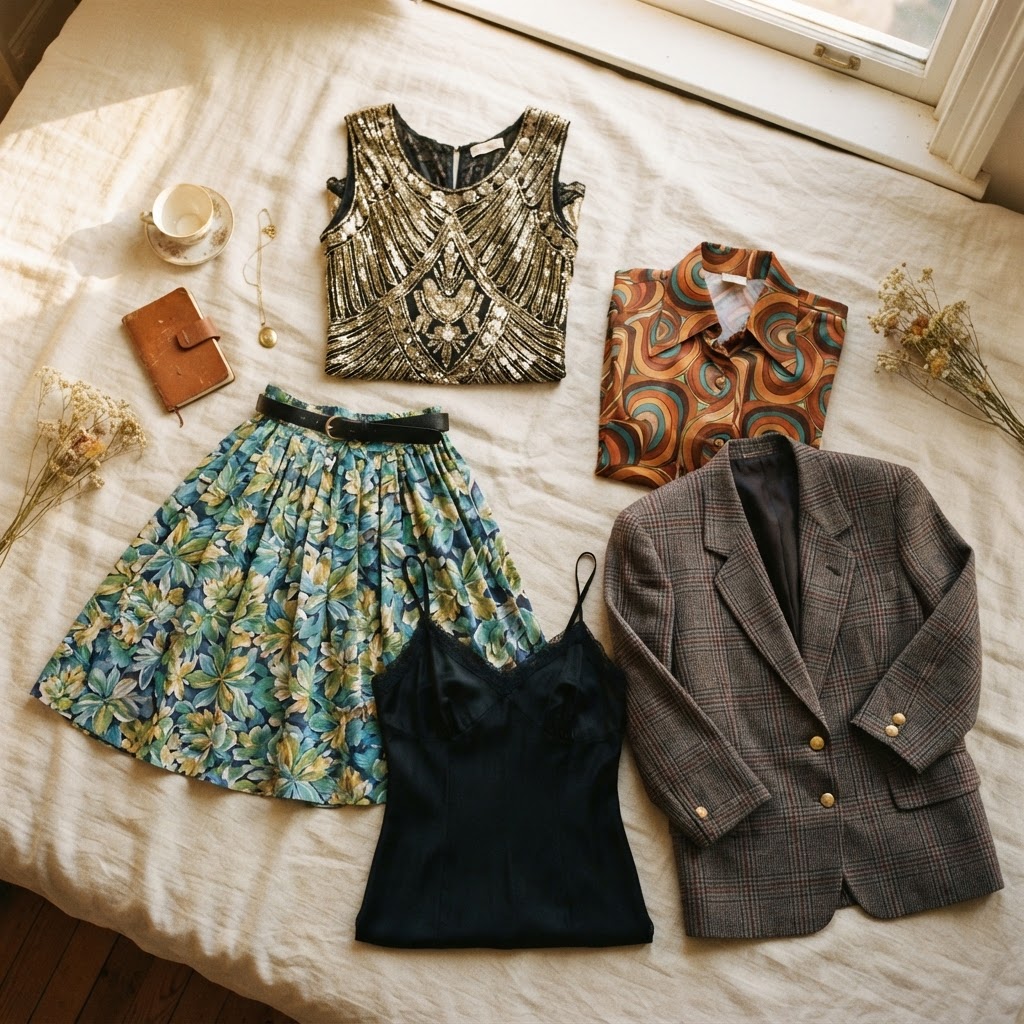
Decode Your Personal Style: A Decade-by-Decade Guide to Finding Your Fashion Identity Through Vintage
Your personal style isn't something you invent — it's something you discover. And there's no better laboratory for that discovery than the rich, diverse world of vintage fashion. From the sleek minimalism of the 1990s to the exuberant glamour of the 1950s, each decade holds a mirror up to a different version of you.
Why Vintage Is the Ultimate Style Tool
Walking into a modern fast-fashion store can feel overwhelming in the worst possible way — everything looks the same, and none of it feels entirely like you. Vintage fashion, by contrast, offers something radical: genuine variety. Each decade produced clothing shaped by its own cultural anxieties, artistic movements, and social revolutions. When you shop vintage, you're not just buying a garment. You're trying on a worldview.
For sellers on platforms like Ensemble, understanding how customers use vintage to build personal style isn't just interesting trivia — it's a competitive advantage. When you know what each era communicates aesthetically and emotionally, you can write better listings, style better photos, and attract buyers who are genuinely excited about what you're offering.
Let's take a tour through the decades and explore what each one brings to the style table.
The 1920s–1930s: Old Hollywood Glamour and Architectural Elegance
For the buyer drawn to bias-cut silhouettes, intricate beading, and the feeling of walking into a black-and-white film, the 1920s and 1930s offer something irreplaceable. The dropped waists and geometric embellishments of the Jazz Age speak to someone who values art as adornment — people who treat getting dressed as a creative act rather than a practical one.
As a seller, pieces from this era are rare and should be positioned accordingly. Highlight provenance, fabric quality, and condition meticulously. Buyers in this category tend to be collectors as much as wearers, and they respond to storytelling. What occasion might this dress have been worn to? What does the craftsmanship reveal about the hands that made it?
The 1940s–1950s: Structure, Femininity, and the Power of a Silhouette
The post-war decades gave us some of the most structurally iconic clothing in fashion history. Nipped waists, full skirts, tailored suits with padded shoulders — this was an era that believed clothes should do something, that a well-cut garment could project confidence and intention.
The customer who gravitates toward 1940s and 1950s vintage often has a strong sense of personal presentation. They like polish. They appreciate when an outfit makes a clear statement. These buyers respond well to listings that emphasize fit, shape, and wearability. Show them how a 1950s circle skirt pairs with a modern turtleneck, or how a 1940s blazer works over contemporary wide-leg trousers. Bridge the gap between vintage and modern, and you'll speak directly to their sensibility.
The 1960s–1970s: Self-Expression, Counterculture, and Color
If the 1950s were about structure, the 1960s were about liberation from it. Mod cuts, bold prints, mini hemlines, and a fearless relationship with color and pattern defined the decade. By the 1970s, that energy had evolved into something earthier — bohemian silhouettes, natural fabrics, folk-inspired embroidery, and a general sense that fashion should feel as free as the person wearing it.
Buyers drawn to these decades tend to be expressive personalities who use clothing to communicate values as much as aesthetics. They care about individuality. They're often drawn to statement pieces — a vintage 1960s mod shift dress in a graphic print, a 1970s peasant blouse with hand-stitched detailing. As a seller, lean into the narrative of uniqueness. These aren't clothes you'll find anywhere else. They're artifacts of a moment when fashion meant something politically and culturally.
The 1980s: Maximum Impact, Minimum Apology
The 1980s remain one of the most polarizing decades in fashion history — and that's exactly what makes them so interesting for personal style exploration. Power shoulders, neon colors, oversized silhouettes, and unapologetic maximalism defined an era that believed more was always more.
Today's vintage shopper approaching the 1980s is usually someone with a sharp, self-aware sense of humor about fashion — someone who can wear an enormous plaid blazer with the confidence of a runway model. These buyers often mix one bold 1980s piece with otherwise understated basics, letting the vintage item do all the talking.
For sellers, the key is curation. Not every piece from the 1980s ages gracefully, but the ones that do — quality wool blazers, silk blouses, leather accessories — are genuinely covetable. Style your photos in ways that show how the piece fits into a modern wardrobe, not just how it looked in its own era.
The 1990s: Minimalism, Grunge, and the Anti-Fashion Fashion Movement
The 1990s produced two seemingly opposite aesthetics that somehow coexist in the decade's legacy: sleek minimalism (think slip dresses, clean lines, and muted palettes) and grunge-influenced maximalism (flannel, combat boots, oversized everything). Both were, in their own way, reactions against the excess of the decade before.
The contemporary vintage buyer obsessed with the 1990s is often someone who values effortlessness above all else. They want to look like they didn't try too hard, even if they absolutely did. Calvin Klein-era minimalism and 1990s grunge both deliver that quality in spades. As a seller, focus on condition and authenticity — this demographic is knowledgeable. They know what real 1990s construction looks and feels like, and they'll appreciate (and reward) accuracy in your listings.
The 2000s–2010s: Nostalgia Is Now
It may feel strange to call Y2K fashion "vintage," but here we are. The early 2000s — with its low-rise jeans, velour tracksuits, logomania, and butterfly clips — is experiencing a full cultural renaissance. Meanwhile, the 2010s brought us the normcore aesthetic, the rise of athleisure, and an ongoing conversation about sustainability in fashion that has only grown louder.
Buyers exploring these decades are often younger shoppers discovering vintage for the first time. They're motivated by nostalgia, sustainability, and the thrill of finding something that feels both retro and immediately wearable. As a seller, this is a high-volume, high-energy market. Descriptions should be fun and conversational. Reference pop culture touchstones. Make the buyer feel like they're recapturing something — a moment, a feeling, a version of themselves.
How to Help Your Buyers Find Their Decade
One of the most valuable things you can do as a vintage seller is position yourself as a style guide, not just a merchant. Consider these approaches:
- Write evocative descriptions that connect garments to the cultural moment they came from. Don't just list measurements — tell a story.
- Style your photos intentionally. Show a 1970s blouse with modern denim. Show a 1950s coat over a simple dress. Help buyers envision the piece in their actual life.
- Curate collections or themed listings that allow browsers to explore a specific decade or aesthetic. Buyers who are still figuring out their style often appreciate being guided.
- Use decade-specific keywords in your tags. Someone searching for "1980s power blazer" or "1960s mod shift dress" knows exactly what they want — make sure your listing shows up for them.
Conclusion: Your Style Story Is Still Being Written
Personal style is never finished. It evolves as you do — picking up something from a 1940s silhouette here, a 1990s attitude there, perhaps a flash of 1970s color when life calls for it. That's the magic of vintage fashion: it gives you access to the full spectrum of human expression across a century of dressing.
At Ensemble, we believe that every piece of authentic vintage clothing is a chapter in a larger story — and that the best style is the one that feels unmistakably like you. Whether you're a seller curating your next collection or a buyer just beginning to explore, Ensemble is the place where those stories find new life. List thoughtfully, shop curiously, and never underestimate the power of the right garment to show you exactly who you are.