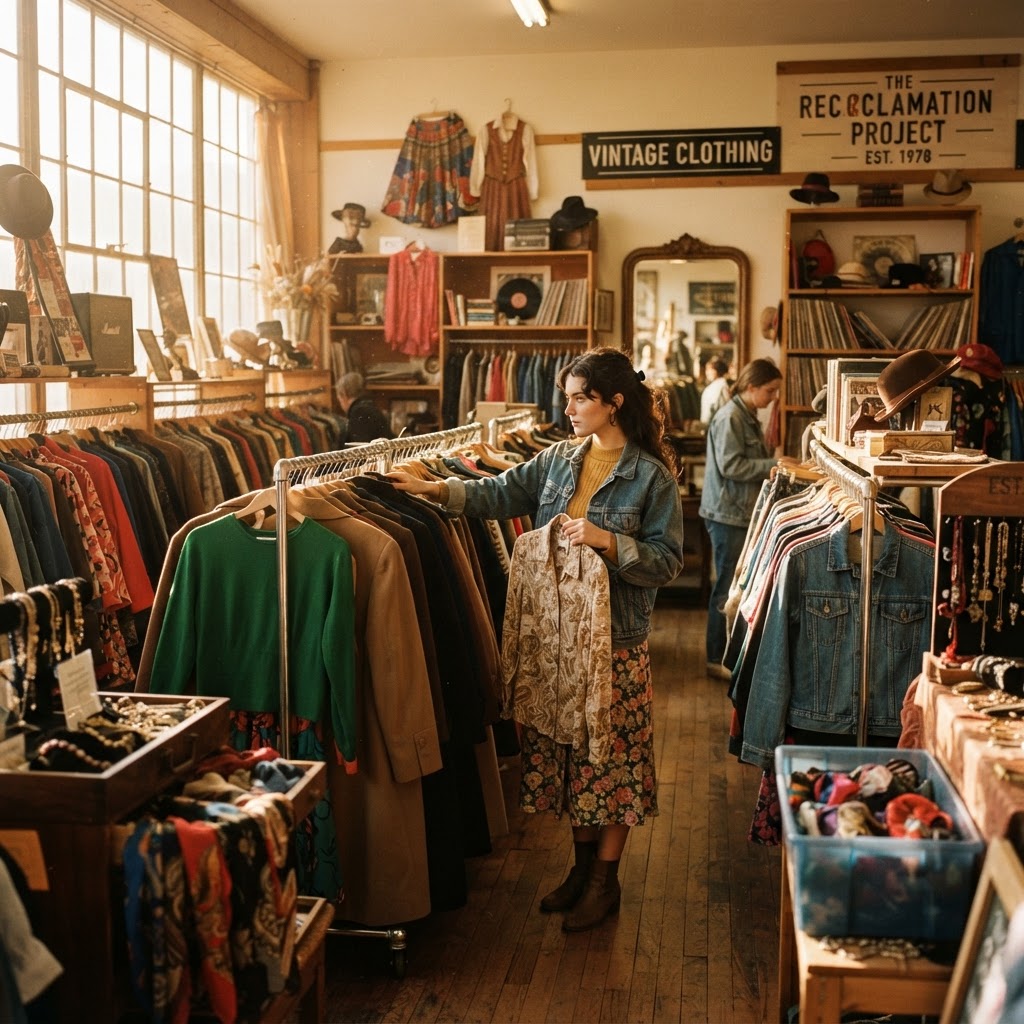
Building a Vintage Wardrobe on a Budget: Smart Thrift Shopping Tips for Every Decade
Dreaming of a closet filled with authentic vintage finds but worried about your wallet? Building a stunning vintage wardrobe doesn't have to cost a fortune. With the right strategies, a sharp eye, and a little patience, you can curate a timeless collection spanning decades — without breaking the bank.
Why Vintage Fashion Is Worth the Hunt
There's something undeniably magical about slipping into a 1970s wrap dress or a 1990s oversized blazer and knowing that the garment has a story. Vintage fashion offers quality, character, and sustainability that fast fashion simply cannot replicate. But the moment the word "vintage" appears on a price tag, numbers can climb fast. The good news? Savvy shoppers know that the best vintage pieces aren't always found in curated boutiques — they're hiding in plain sight, waiting to be discovered.
Whether you're drawn to the Art Deco glamour of the 1920s, the free-spirited silhouettes of the 1960s, or the grunge-inflected minimalism of the 1990s, building a vintage wardrobe on a budget is entirely achievable. It just takes strategy.
Know Before You Go: Research Your Decades
The single most powerful thing you can do before hitting any thrift store or flea market is educate yourself on the decades you love. Each era has distinct silhouettes, fabric types, construction details, and label clues that help you identify authentic pieces — and avoid overpriced reproductions.
- 1920s–1940s: Look for bias-cut silhouettes, rayon crepe, and hand-stitched seams. Labels from this era are often woven directly into the garment with simple brand names and country of origin.
- 1950s–1960s: Full skirts, structured bodices, and early synthetic fabrics like Dacron polyester are hallmarks. Look for metal zippers, which were standard before nylon zippers became common in the late 1960s.
- 1970s: Earth tones, wide lapels, qiana nylon, and the unmistakable rise of polyester leisure suits. Union labels (like the ILGWU tag) can help you date a piece accurately.
- 1980s–1990s: Power shoulders, bold prints, and the emergence of designer logos. The 1990s brought minimalism, slip dresses, and the iconic grunge layering aesthetic.
- 2000s–2010s: Low-rise denim, logomania, and Y2K aesthetics are all back in demand — and these pieces are often the most affordable finds right now because they're newly entering the vintage market.
Knowing these details means you'll recognize a genuine 1950s circle skirt from a modern reproduction and understand why one is worth twice the price of the other.
The Thrift Store Playbook
Thrift stores are the backbone of budget vintage shopping, but not all thrift runs are created equal. Here's how to maximize every trip:
Shop on rotation days. Most thrift chains like Goodwill and Salvation Army restock shelves on specific days of the week. Ask your local store when new donations hit the floor, and plan your visits accordingly. Early birds catch the best pieces.
Go off the beaten path. Thrift stores in wealthier suburban neighborhoods often receive donations from estates and closet cleanouts that include high-quality older garments. Meanwhile, stores in college towns tend to have an abundance of 1990s and 2000s pieces.
Don't skip the housewares section. Scarves, belts, hats, and jewelry are often tossed in with household goods. Some of the best vintage accessories — silk scarves, bakelite bangles, beaded clutches — turn up in the most unexpected bins.
Check garment weight and construction. Older garments are typically heavier and better constructed than modern fast fashion. Pull at the seams gently, check for French seams or hand-finishing, and examine buttons. Genuine shell, glass, or metal buttons are a strong indicator of age and quality.
Flea Markets, Estate Sales, and Swap Meets
If thrift stores are the bread and butter of vintage hunting, then estate sales and flea markets are the feast. These venues often yield pieces that have been stored for decades — sometimes never worn — and sellers are frequently willing to negotiate.
At estate sales, arrive early for first pick, but come back on the last day for discounts. Families selling a loved one's belongings are often more interested in clearing space than maximizing profit, which means real bargains on authentic mid-century clothing and accessories.
At flea markets, build relationships with regular vendors. If a dealer knows you're specifically hunting 1940s silk blouses or 1980s Japanese denim, they'll often set pieces aside for you before they hit the table. This insider access is invaluable.
Swap meets and clothing exchanges — increasingly popular in urban areas — are goldmines for 1990s and 2000s pieces as millennials and Gen Z clear out their childhood closets. Best of all, these events are often free or extremely low cost.
Online Thrifting Without the Traps
Platforms like eBay, Depop, Poshmark, and ThredUp have democratized vintage shopping, but they've also created a minefield of mislabeled, overpriced, or inauthentic pieces. Here's how to shop smarter online:
- Search by label, not just style. Instead of searching "vintage 1960s dress," try searching for specific manufacturers or union label indicators. This filters out modern items incorrectly tagged as vintage.
- Ask for detail photos. Always request close-ups of labels, zippers, seams, and any flaws before purchasing. Reputable sellers will have no problem providing them.
- Factor in condition honestly. A 1930s beaded gown with significant damage may look romantic in photos but require expensive restoration. Budget for alterations and repairs when calculating total cost.
- Set price alerts. Many platforms allow you to save searches. Set alerts for specific items and let deals come to you rather than endlessly scrolling.
For truly authenticated vintage pieces with transparent decade dating and condition grading, curated marketplaces cut through the noise significantly — more on that shortly.
Building a Capsule: Think in Decades, Dress Across Them
One of the smartest budget strategies is to build a cross-decade capsule wardrobe rather than trying to dress head-to-toe in a single era. This approach gives you more flexibility, makes mixing and matching easier, and means you're not competing in the most expensive niche of any single decade.
Consider anchoring your wardrobe with:
- A 1950s or 1960s structured coat (incredibly versatile and built to last)
- A handful of 1970s or 1980s blouses and tops (easy to find, affordable, and endlessly stylish)
- 1990s denim and knitwear (currently abundant and underpriced)
- Statement accessories from any decade (scarves, belts, and bags elevate any outfit)
Layering decades creates outfits that feel personal and curated rather than costumed — the hallmark of someone who truly understands vintage style.
Care, Storage, and Longevity
Budget vintage shopping isn't just about finding pieces cheaply — it's about making them last. Proper care dramatically extends the life of delicate older garments:
- Store woolens and silks in breathable garment bags with cedar blocks, never plastic.
- Hand wash or dry clean according to fabric type. When in doubt, dry clean.
- Repair small damage immediately — a loose button or fraying seam becomes a ruined garment if ignored.
- Keep vintage pieces out of direct sunlight to prevent fading.
Discover Authenticated Vintage at Ensemble
Armed with these strategies, you're ready to thrift smarter and build a wardrobe that tells a story across generations. But when you want the confidence of knowing exactly what decade your piece is from, that it's been authenticated, and that it's priced fairly — that's where Ensemble comes in.
At Ensemble, our marketplace specializes in authentic clothing from the 1920s through the 2010s, with every piece carefully vetted for era accuracy and condition. Whether you're hunting for a genuine 1940s swing dress or a perfect 1980s power suit, Ensemble connects you with sellers and pieces you can trust.
Your vintage wardrobe journey starts with curiosity and a good eye — let Ensemble help you take it to the next level.